
Procurement for office and industrial supplies might seem routine, but for public sector organizations, it’s anything but simple. Between compliance requirements, budget constraints, and the need to keep operations running without interruption, every purchasing decision carries weight. Cooperative contracts offer a smarter way forward, helping procurement teams move faster, stay compliant, and access competitive pricing without the burden of starting from scratch.
Why Office and Industrial Procurement Is More Complex Than It Looks
Office supplies and industrial products are the backbone of daily operations. From administrative offices to maintenance teams, everything depends on having the right materials available at the right time.
But procurement leaders know the challenge isn’t just about ordering products. It’s about:
- Staying compliant with procurement regulations
- Managing budgets across departments
- Avoiding delays tied to lengthy bid processes
- Ensuring consistent pricing and supply
When those factors collide, even simple purchases can become time-consuming and resource-heavy.
What Is a Cooperative Contract for Office and Industrial Supplies?
A government office supply contract or industrial supply cooperative contract allows public sector organizations to purchase through pre-negotiated, competitively solicited agreements.
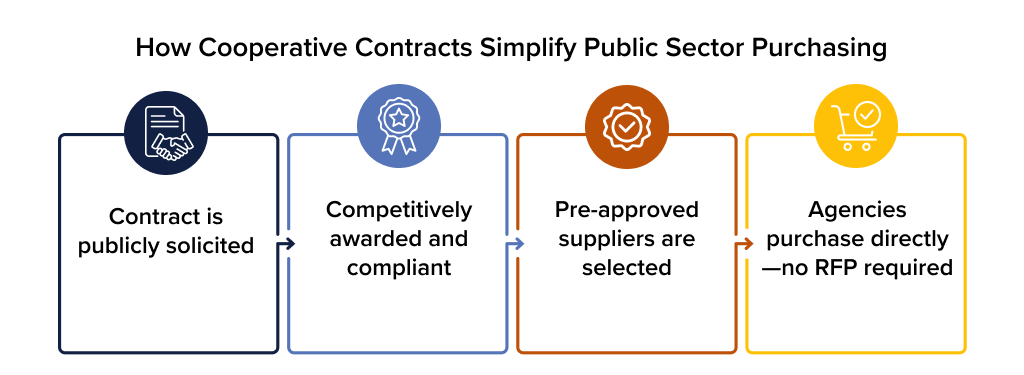
Instead of running your own RFP, you can leverage contracts that are already:
- Publicly solicited
- Competitively awarded
- Fully compliant with procurement requirements
These agreements often include well-known suppliers like WB Mason, Global Industrial, Brady Plus, and Office Depot, giving you access to a wide range of office, janitorial, safety, and industrial products through a single, streamlined approach.
How Cooperative Contracts Simplify Public Sector Purchasing
Eliminating the Need for Lengthy RFP Processes
Running a bid process takes time, coordination, and internal resources. Cooperative contracts remove that barrier by giving procurement teams access to ready-to-use agreements.
That means less time drafting RFPs and more time actually getting what you need.
Ensuring Procurement Compliance
Compliance is one of the biggest pressures in public sector purchasing.
Using a municipal purchasing contract through a cooperative helps ensure:
- Competitive bidding requirements are satisfied
- Proper documentation is already established
- Audit risk is significantly reduced
It’s a cleaner, more reliable way to purchase without second-guessing every step. m
Standardizing Purchasing Across Departments
Without a centralized contract, purchasing can become fragmented. Different departments may work with different vendors, pricing structures, and processes.
Cooperative contracts help bring everything under one umbrella by:
- Consolidating supplier relationships
- Aligning pricing across departments
- Improving visibility into overall spend
The result is more control and fewer inconsistencies.
Benefits of Cooperative Contracts for Office and Industrial Supplies
Access to Public Sector Office Supply Pricing
One of the biggest advantages of cooperative purchasing is pricing power.
Because contracts aggregate demand across multiple agencies, they unlock public sector office supply pricing that individual organizations often can’t achieve on their own.
This applies across categories like:
- Office essentials (paper, toner, furniture)
- Janitorial and sanitation supplies
- Safety equipment and PPE
- Industrial and MRO products
Faster Purchasing Cycles
When contracts are already in place, procurement teams don’t have to wait on approvals or bid timelines.
You can move quickly, place orders with confidence, and keep operations running without disruption.
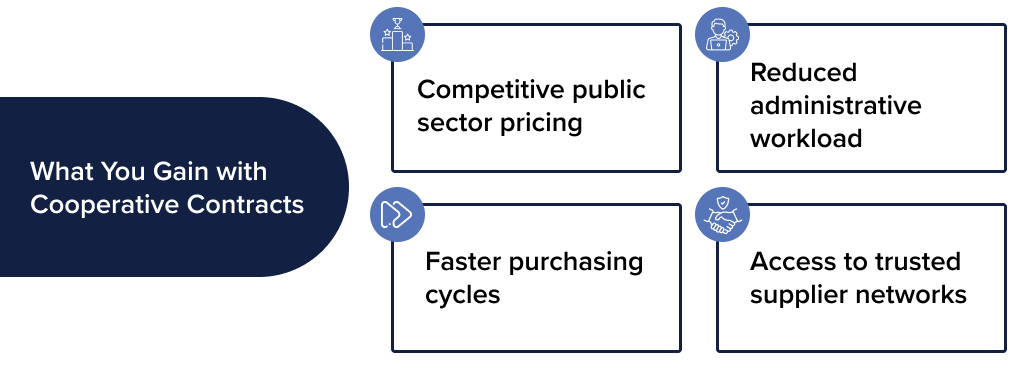
Reduced Administrative Burden
Procurement teams are often juggling multiple priorities with limited resources.
Cooperative contracts help reduce the workload by minimizing:
- Bid development and evaluation
- Vendor onboarding processes
- Contract negotiation cycles
That frees up time to focus on strategy instead of paperwork.
Reliable Supplier Networks
Cooperative contracts typically include vetted, experienced suppliers that understand public sector needs.
That means:
- More consistent product availability
- Reliable fulfillment
- Stronger supplier relationships
And when supply chain disruptions happen, having those relationships in place makes a real difference.
Common Challenges in Office and Industrial Procurement
Even with strong processes, procurement teams still face ongoing challenges.
Fragmented Spend Across Departments
When purchasing is decentralized, it becomes difficult to track total spend or identify cost-saving opportunities.
Complex Compliance Requirements
Procurement rules vary across municipalities, school systems, and agencies, making it harder to ensure every purchase meets the right standards.
Balancing Cost, Quality, and Availability
The lowest price doesn’t always deliver the best value, especially when product quality and availability impact daily operations.
How Edge Public Supports Smarter Cooperative Purchasing
Edge Public helps public sector organizations simplify procurement by connecting them to a network of publicly solicited, compliant cooperative contracts.
Through this approach, procurement teams can:
- Access trusted suppliers for office and industrial needs
- Streamline purchasing through pre-approved agreements
- Gain better visibility into spend and supplier performance
- Maintain compliance without adding complexity
It’s not just about making purchasing easier; it’s about making it more strategic.
Choosing the Right Cooperative Contract Strategy
Not all contracts deliver the same value.

When evaluating a government office supply contract or industrial supply cooperative contract, it’s important to look at:
- Product coverage: Does the contract support both office and industrial categories?
- Supplier network: Are vendors reliable and scalable?
- Pricing structure: Is it competitive and transparent?
- Compliance alignment: Does it meet your organization’s requirements?
- Ease of implementation: Can your team adopt it quickly?
The right contract should simplify your process, not create new hurdles.
A Smarter Way to Purchase Office and Industrial Supplies
Public sector procurement doesn’t have to be slow, fragmented, or overly complicated.
Cooperative contracts provide a practical way to streamline purchasing, reduce administrative burden, and ensure compliance all while delivering competitive pricing and reliable supply.
For procurement leaders tasked with doing more with limited resources, that’s not just helpful.
It’s essential.
Frequently Asked Questions
What is a government office supply contract?
A government office supply contract is a competitively solicited agreement that allows public sector organizations to purchase office supplies at pre-negotiated pricing while meeting compliance requirements.
How does an industrial supply cooperative contract work?
It allows organizations to purchase industrial and MRO supplies through contracts that have already been bid and awarded, eliminating the need to run a separate RFP.
Are cooperative contracts compliant with public procurement rules?
Yes. Most cooperative contracts are publicly solicited and designed to meet state and local procurement regulations, making them a compliant purchasing option.
Who can use municipal purchasing contracts?
Cities, counties, school districts, higher education institutions, and other public sector entities can typically use these contracts, depending on eligibility requirements.